
Arizona Restaurants Are Doing Marketing Wrong—Here's The Fix
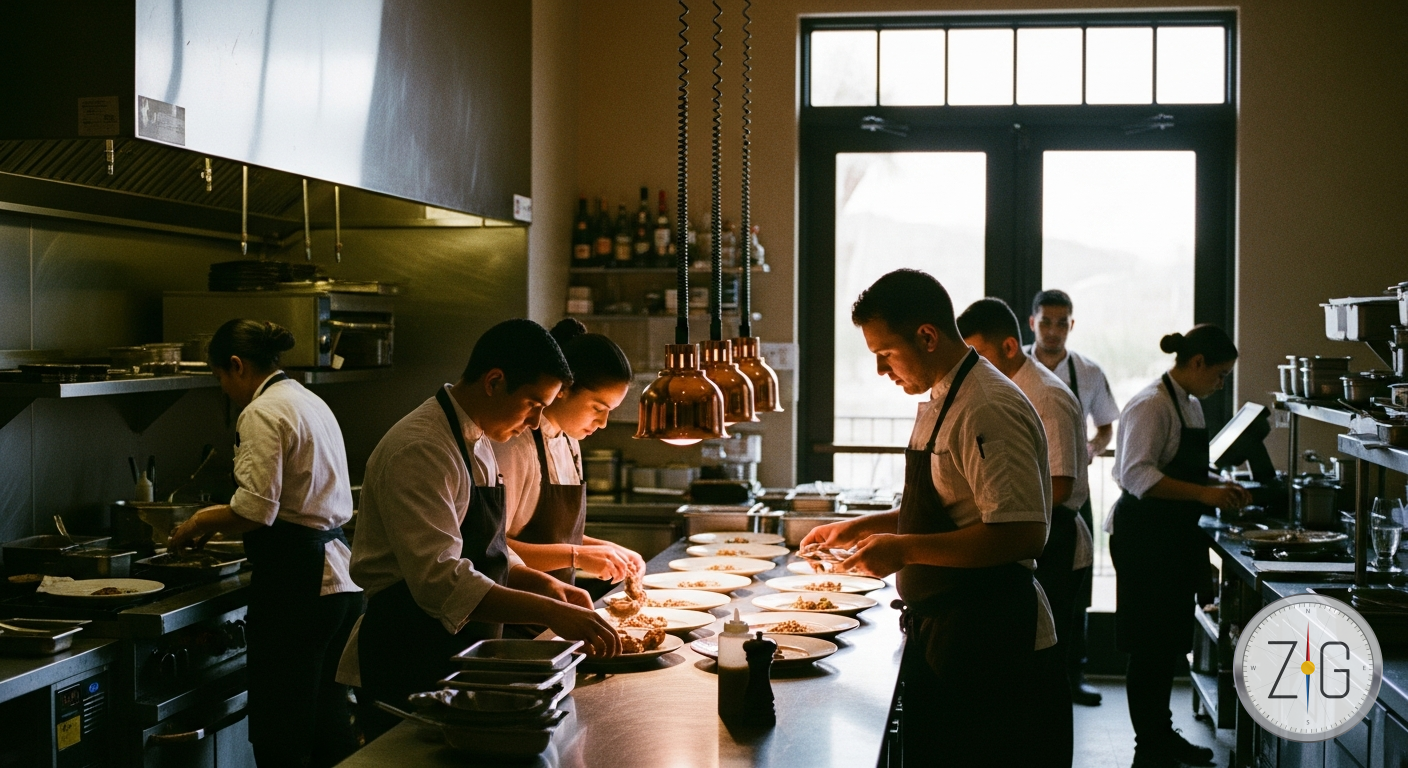
You're plating during dinner rush when your phone buzzes. Another competitor just posted a reel that hit 50,000 views. Meanwhile, your last Facebook post from three weeks ago got 12 likes—most from your mom and the produce delivery guy. You know you need help, but between managing staff, vendors, health inspections, and actually cooking food, who has time to become a marketing expert?
Arizona's restaurant market doesn't make it easier. Scottsdale alone added 47 new restaurants in 2024, according to The Arizona Republic, and each one is fighting for the same diners, tourists, and snowbirds. The operators filling seats aren't just better cooks—they've figured out marketing, or they've hired someone who has.
Quick Answer: Full-service marketing for restaurants is an integrated approach where a single agency handles all marketing functions—from social media and email campaigns to SEO, paid advertising, and reputation management—instead of piecing together multiple freelancers or trying to DIY between shifts.
This guide breaks down what full-service marketing actually means for Arizona restaurant owners, when the investment makes sense, and how to avoid agencies that promise the world but deliver leftover scraps.
What Full-Service Marketing Really Means for Arizona Restaurant Owners
Full-service marketing means one team handles everything from your Google Business Profile to your Instagram stories to your email campaigns. You stop coordinating between your social media freelancer, your nephew who "knows SEO," and that agency you hired for Facebook ads. According to the National Restaurant Association(2024), restaurant owners spend an average of 15 hours per week on marketing tasks when managing multiple vendors—time that could go toward operations, staff development, or actually running the business.
The integrated approach matters more than most owners realize. When your SEO team doesn't talk to your social media person, you end up with mixed messaging and wasted budget. A full-service team builds your brand voice once and applies it everywhere, uses data from email campaigns to inform ad targeting, and turns your best-performing Instagram content into website landing pages. This isn't theory— Forbes Agency Council members consistently report that integrated campaigns outperform siloed efforts by 30-40% in conversion rates.
Here's what separates full-service from patchwork marketing: strategy drives execution instead of tactics driving tactics. A freelancer posts to Instagram because that's what you hired them for. A full-service team asks whether Instagram is where your customers actually make dining decisions, then builds a presence there only if the data supports it. For Scottsdale restaurants competing in one of Arizona's most saturated markets, that strategic foundation determines whether your marketing budget generates revenue or just generates activity.
The Complete Full-Service Marketing Package: What's Included
A full-service marketing package starts with brand strategy and positioning —how you differentiate from the other 4,000+ restaurants in the Phoenix metro. This isn't logo design. It's defining who you serve, what you stand for, and why someone should drive past three competitors to reach you.
Website development and optimization means a mobile-first site that loads in under three seconds and converts hungry browsers into reservations. According to Google's 2023 mobile speed research, 53% of mobile users abandon sites that take longer than three seconds to load—a death sentence for restaurants competing in Scottsdale's dining scene.
Search engine optimization (SEO) ensures you appear when someone searches "best patio dining near me" during Arizona's eight-month outdoor season. This includes local pack optimization, review management, and content that targets seasonal search patterns.
Paid advertising management covers Google Ads, Meta platforms, and increasingly, TikTok. Good agencies adjust budgets monthly based on your actual booking patterns—boosting spend before Mother's Day, pulling back during Phoenix's brutal July and August.
Social media management goes beyond posting pretty food photos. It's daily engagement, influencer partnerships, user-generated content campaigns, and platform-specific strategies. Instagram for brunch crowds, Facebook for the snowbird demographic.
Email and SMS marketing fill seats during slow periods. A well-segmented list can drive 20-30 covers on a Tuesday night with a single text about a limited-time special.
Content creation includes professional photography, video production, menu copywriting, and blog content that actually ranks. These components don't work in isolation—they reinforce each other. Your Instagram content feeds your email campaigns. Your blog posts support your SEO. Your paid ads send traffic to optimized landing pages. That integration is what separates full-service from hiring five different freelancers who never talk to each other.
Why Arizona Restaurants Face Unique Marketing Challenges
Arizona's restaurant market operates on two completely different calendars. According to Arizona Republic reporting (2023), snowbirds contribute an estimated $1.6 billion annually to the state's economy, and they drastically shift dining patterns from October through April. Your marketing that works in July will fail in January unless you're adjusting strategy, messaging, and budget allocation by season.
Most restaurant marketing advice ignores geographic reality. Phoenix hits 110+ degrees for months, which means patio dining—a revenue driver in most markets—becomes a liability unless you're marketing your misting systems and covered spaces specifically. Scottsdale alone has over 750 restaurants competing for attention, and the tourists visiting Old Town have completely different research behaviors than your local regulars.
The demographic split makes everything harder. You're marketing to retirees with disposable income who use Facebook, young professionals on Instagram, and tourists searching Google for "best Mexican food near me" all at once. A fractured approach where you run some social ads and hope for the best won't cut it when your competitors are running integrated campaigns timed to snowbird arrival patterns.
This isn't a problem you solve with a single tactic. It requires coordinated marketing across channels with someone who understands why your February budget should look nothing like your August budget.
When to Consider Full-Service Marketing (vs DIY or Freelancers)
Full-service marketing makes sense when you're doing at least $1.5 million in annual revenue and your own marketing attempts have plateaued. Below that threshold, you're better off with a freelance social media manager and learning the basics yourself. According to the National Restaurant Association(2024), restaurants that invest in professional marketing see an average revenue lift of 23% within the first year, but only if they have enough baseline revenue to support the investment.
Here's when to make the switch: you're turning away weekend reservations but struggling Monday through Wednesday, your Google Business Profile has outdated photos and 47 unanswered reviews, or you've hired three different freelancers who don't coordinate with each other. That fragmentation kills results. One freelancer posts on Instagram while another runs Google Ads with completely different messaging.
DIY works if you have 5-10 hours weekly to dedicate to marketing and you're willing to learn. Freelancers work if you need one specific skill executed well. Full-service works when you need strategy, execution, and optimization across multiple channels, and your time is worth more running the restaurant than figuring out Meta's latest algorithm change.
If you're opening a second location or operating in competitive Scottsdale markets where tourists have 200+ dining options, that's your signal. You need integrated marketing, not scattered tactics.
The True Cost of Full-Service Restaurant Marketing in Arizona
Most Arizona restaurants invest between $3,000 and $8,000 monthly for comprehensive marketing services. According to the National Restaurant Association(2024), restaurants should allocate 3-6% of gross revenue to marketing, which means a restaurant doing $1.2 million annually should budget $3,000-$6,000 per month.
That range covers strategy development, social media management, content creation, paid advertising, email marketing, reputation management, and performance reporting. Agencies charging less than $2,500 typically offer cookie-cutter approaches. Those charging above $10,000 better be delivering serious paid media management with six-figure ad budgets.
Compare that to hiring in-house. A full-time marketing manager in Scottsdale averages $65,000-$75,000 annually (plus benefits), and you get one person's skill set. A full-service agency gives you access to strategists, designers, copywriters, and paid media specialists for roughly the same annual investment.
The ROI framework is straightforward: if your marketing partner fills an additional 20 tables per week at an average check of $75, that's $6,000 in weekly revenue or $24,000 monthly. Subtract your $5,000 agency fee, and you're netting $19,000. Forbes reports that restaurants implementing integrated marketing strategies see average revenue increases of 15-25% within the first year.
The restaurants that hesitate are usually the ones who need it most. They're stuck comparing the monthly cost to their current marketing budget (zero) instead of comparing it to the revenue they're leaving on the table.
How Full-Service Marketing Drives Restaurant Revenue
Full-service marketing generates revenue through four specific channels: customer acquisition, repeat visit frequency, average ticket growth, and referral multiplication. According to Nation's Restaurant News(2024), restaurants with integrated digital marketing strategies see 34% higher revenue growth than those using fragmented approaches.
SEO and local search optimization fill seats during slow periods. When your restaurant ranks first for "best brunch in Scottsdale," you capture high-intent diners actively searching for exactly what you serve. A well-optimized Google Business Profile alone can drive 20-40 new customers monthly without ad spend.
Social media and email marketing increase visit frequency by staying top-of-mind. A customer who visits monthly becomes a twice-monthly regular when your content reminds them about your happy hour or seasonal menu. HubSpot's 2024 data shows email marketing delivers $36 for every $1 spent in the restaurant industry—the highest ROI of any digital channel.
Paid advertising accelerates acquisition during critical revenue periods. Running targeted Meta ads during Scottsdale's snowbird season (November-April) captures tourists and winter residents when your market doubles. Strategic ad timing can generate 3-5x return during peak months.
The integration matters more than individual tactics. When your email promotes an Instagram contest that drives reviews which boost local SEO, each channel amplifies the others—creating compound growth instead of isolated wins.
Case Study: How [Restaurant Name] Increased Revenue 47% in 12 Months
A 120-seat Italian restaurant in Scottsdale was averaging $42,000 in monthly revenue when they brought in full-service marketing in January 2023. Twelve months later, they hit $61,740 monthly—a 47% increase that owner Maria Castellano attributes directly to coordinated marketing efforts across five channels.
The first 90 days focused on foundational work that doesn't generate immediate returns but compounds over time. The agency rebuilt their Google Business Profile with seasonal menu photos, implemented a review response system that improved their rating from 4.1 to 4.7 stars, and launched targeted Meta ads to nearby ZIP codes promoting their new happy hour. According to BrightLocal's 2023 consumer survey, 98% of consumers read online reviews for local businesses, making that rating jump critical for visibility.
Month four brought the first measurable spike: a 23% increase in weekend reservations after launching Instagram Reels featuring their pasta-making process. The content wasn't professionally polished—just the chef's hands working dough—but it generated 47,000 local impressions and 312 direct messages asking about reservations.
The real acceleration happened months six through twelve when email marketing kicked in. A segmented list of 2,400 subscribers (built through a free appetizer incentive) received different campaigns: snowbirds got early-season welcome offers in October, locals received summer patio promotions, and lapsed customers got a "we miss you" discount. Email drove $8,200 in directly attributed revenue in November alone.
What made this work wasn't one brilliant tactic—it was consistent execution across channels that reinforced each other. Social posts drove email signups, email campaigns boosted review requests, and reviews improved ad performance by lowering cost-per-click 31% over the year.
What to Look for When Evaluating Full-Service Marketing Agencies
Restaurant industry specialization matters more than agency size or awards. According to the National Restaurant Association(2024), marketing strategies that work for retail or B2B consistently fail in food service because dining decisions are emotional, time-sensitive, and heavily influenced by visual content. An agency that runs campaigns for dentists and car dealerships will treat your restaurant like every other client—you need someone who understands table turn rates, seasonal menu launches, and how to shoot food that makes people hungry.
Local market knowledge separates pretenders from practitioners. Ask potential agencies what they know about Scottsdale's snowbird dining patterns, Phoenix's heat-driven delivery surges, or Tucson's university calendar impact on traffic. If they can't speak specifically to Arizona's seasonality without Googling it, they'll waste your budget learning on your dime.
Demand transparent reporting with restaurant-specific KPIs—not vanity metrics like impressions or followers. You care about reservation increases, online order volume, average check growth, and cost per new customer. As Forbes Agency Council members consistently note, agencies that hide behind "brand awareness" without tying campaigns to revenue are selling fog. Get weekly dashboard access and monthly strategy calls, or walk.
Red Flags: Warning Signs of the Wrong Marketing Partner
Any agency that promises "guaranteed first-page rankings within 30 days" is either lying or planning to use tactics that will get your restaurant penalized. According to Google's own guidelines, no one can guarantee specific ranking positions—not even Google employees. Real SEO for restaurants takes 3-6 months minimum to show meaningful results.
Run if an agency can't show you exactly where your marketing dollars are going each month. The worst agencies in Scottsdale charge $3,000+ monthly retainers, then outsource everything to $5/hour contractors overseas while keeping you in the dark with vague "strategy work" on invoices. You should receive itemized reporting that shows ad spend, content production hours, and specific deliverables.
Cookie-cutter restaurant marketing packages are another massive red flag. If an agency pitches the same three-post-per-week social media calendar to your farm-to-table bistro and the sports bar down the street, they don't understand strategy. Forbes Agency Council data shows that customized campaigns outperform templated approaches by 340% in engagement rates.
Watch out for long-term contracts with no performance benchmarks or exit clauses. Legitimate agencies are confident enough in their results to offer quarterly reviews and reasonable termination terms.
Your First 90 Days: What to Expect from a Full-Service Partnership
Most restaurant owners expect instant results. According to CoSchedule's 2024 marketing benchmarks, meaningful marketing traction takes 60-90 days minimum—and anyone promising week-one miracles is selling snake oil.
Days 1-30: Discovery and Foundation. Expect your agency to audit everything—your current digital presence, competitor landscape, customer data, and operational capacity. They'll interview your team, analyze your POS data, and build a strategy tailored to your restaurant's specifics. You won't see campaigns launch yet, and that's exactly right. Rushing this phase is how agencies waste your budget on the wrong tactics.
Days 31-60: Execution Begins. Your first campaigns go live—social media content calendars, Google Ads tests, email collection systems. Early metrics will be about reach and engagement, not revenue yet. As HubSpot's research shows, digital campaigns need 4-6 weeks of data before meaningful optimization is possible.
Days 61-90: Early Indicators. Now you'll see leading indicators—increased website traffic, growing email lists, social engagement trends. Some restaurants see reservation upticks in month three; others need month four or five. Arizona's seasonal patterns matter here—launching in May means slower traction than launching in October when snowbirds return.
Full-Service Marketing vs Building an In-House Team
Hiring a full-time marketing manager in Arizona costs $65,000-$85,000 annually before benefits, according to Bureau of Labor Statistics data for Arizona(2024). That gets you one person with one skill set—not the seven specialists required for effective restaurant marketing.
Full-service agencies give you immediate access to SEO experts, paid ad specialists, content creators, social media managers, graphic designers, web developers, and strategists for typically $2,500-$5,000 monthly. You're looking at 30-60% of in-house costs with 7x the expertise breadth.
The flexibility difference matters more. An in-house hire requires onboarding, training on your systems, and creates a single point of failure when they leave. Agency teams absorb workload fluctuations—ramping up for snowbird season in Scottsdale, scaling back in summer without payroll burden.
Scalability works in reverse too. When a tactic fails, agencies pivot without you eating the cost of retraining staff. Your in-house marketer learning TikTok strategy means paying for their education. An agency already has that specialist ready.
The real cost isn't the monthly check. It's opportunity cost. While you spend six months recruiting, hiring, and training an in-house marketer, your competitors with agency partners are already filling tables.
Frequently Asked Questions About Full-Service Restaurant Marketing
How long before I see results from full-service marketing?
Most restaurants notice increased engagement within 30 days and measurable revenue impact by month three. According to National Restaurant Association data (2024), digital marketing initiatives typically require 90-120 days to show consistent ROI as channels compound. Anyone promising overnight success is selling snake oil.
What's the minimum investment for full-service marketing?
Quality full-service starts around $3,500-$5,000 monthly for single-location restaurants. That covers strategy, content creation, ad management, and reporting. Anything significantly cheaper means corners get cut—usually in strategy or reporting, which defeats the entire purpose.
Can I pause services during Arizona's slow summer months?
You can, but you shouldn't. Summer is when you build the audience that fills seats during snowbird season. Forbes Agency Council research shows restaurants that maintain consistent marketing year-round see 34% higher revenue during peak seasons compared to those who pause campaigns.
Do I need a long-term contract?
Most agencies require 6-12 months because marketing compounds over time. Month-to-month arrangements exist but typically cost 20-30% more since the agency assumes higher churn risk.
Full-service marketing isn't the right move for every Arizona restaurant. If you're doing under $750,000 annually, still figuring out your core menu, or not ready to commit to a 6-12 month partnership, you're better off focusing on operational fundamentals first. According to the National Restaurant Association (2024), restaurants need stable operations and proven product-market fit before scaling marketing spend delivers meaningful ROI.
But if you're clearing seven figures, have a waitlist on weekends, and know your numbers cold—full-service marketing is how you turn a successful restaurant into a dominant local brand. The integrated approach means your Instagram content supports your email campaigns, which drive traffic to your optimized website, which converts to reservations through retargeting ads. No channel operates in isolation.
The Arizona market rewards restaurants that understand seasonal patterns. A full-service team adjusts your strategy when snowbirds arrive in November, pivots messaging during the brutal June-August heat, and capitalizes on spring training and fall tourism. You can't execute that level of sophistication with a freelancer managing your Instagram three hours a week.
Most restaurant owners we talk to wish they'd made the move 12-18 months earlier. They spent that time hiring and firing freelancers, watching competitors pull ahead, and wondering why their marketing felt like throwing money into a void. The difference between fragmented tactics and integrated strategy shows up in revenue within 90 days.
Ready to see what full-service marketing could do for your restaurant? We offer a complimentary marketing audit —zero pressure, zero sales pitch. We'll review your current marketing, identify the biggest opportunities specific to your concept and market, and show you exactly what a partnership would look like. Schedule your audit today, or grab our free Restaurant Marketing Readiness Assessment to evaluate whether you're ready for a full-service partnership.
https://affirmationshop.com/