
Quick & Dirty - Types of Videos for Your Website
Zack Greenfield • March 9, 2021
My name is Zack Greenfield. Welcome to another episode of quick and dirty marketing tips. This is part of our design website, design sales series. If you haven't watched the other videos, go back a little bit. This one ties into all of that. So sticking to this, and we're going to start unpacking types of videos that you might need on your webpages.
So we're going to go over different types of videos that you may need or want on your webpages. Some of the ones we've done in the past and kind of what best uses are and how to think about it in a constructive way that doesn't become a time suck, but helps you build your business and helps your customers understand your business in a deeper and more meaningful way. So let's just talk about design and stuff a little bit, this kind of where, um, you know, creativity and there's a lot of subjectivity. There's definitely some science to this. Cause you can look at, you know, bounce rates and analytics and things like that. But also you want to have something that ties to your brand and has the look and feel that you want. And video is one of those incredibly powerful tools that, you know, can go, can go bad on you fast, but it can also be really great if it's done well or, you know, and, and set up properly.
So let's just start with kind of the one that got really popular. I think like probably three or four years ago is that big hero shot video, right? So the hero shot and maybe Angie, you could show one up here, like a hero video or hero image is going to be like, the website is the whole video when they land on it, there really is nothing else there, just this moving thing, uh, image and those hero videos are great, uh, because they really are visually disruptive and they grab attention right away. The tricky thing with those is sometimes people feel a little lost. Like what do they do next? Like where's the menu like, do I scroll? You know, and, and what am I learning from this video? And remember too, that browser security stuff has changed a lot since those became popular, where now you don't get sound and sometimes they might not auto play.
So there's some stuff to be like technical stuff to be careful with on that. But that's one type. Okay. Then next one, which is a little different than that one, because that one's really, the hero shot thing is really an emotive tool that creates immediate emotional engagement with your product or service. It should anyways, the other kind of different way to do that is like a brand is a brand impact video. So that's a lot of going to be showing your customers using your brand and maybe some cool stuff, you know, kind of unpacking. Like if it's product, it might be, you know, an exploded diagram. If it's a really cool, you know, services business or something that might show like people engaging with that, you know, are lined up, right? So this impact video is a video that is going to be placed on your site.
That's really the first experience that somebody would have with the brand that leaves them with a memorable, you know, the impact, some amount of memorable way. All right. So that's a great way to think about that. It's not necessarily calling for action. It's not telling them click here, buy this. It's not a sales video. It doesn't have a discounts on it does not direct offers its brand impact. It leaves an emotional imprint on the viewer about your brand and communicates what it is that you do or whatever. If you sell something like, you know, Dale's RV here, then it might talk about, you know, how cool the fun this is to put together something like that. Okay. Then next types of videos are more informative, right? So as it relates to our last topic, the customer journey video might have more informational videos or educational.
If you will, where you're telling, you know, you're directly passing on knowledge. So this is more upstairs type information. The impact and hero shots are more here in the heart, right? Those are emotive, uh, goals. These info videos are more cognitive information that you want to share, that the person that's looking to do business with you needs to know or should know, uh, and you know, they, and that would help them make a decision or persuade them perhaps, or inform them on how to get what they want. You know, those types of things. And then inside that is like a little sub category, which I always really like is like the explainer video. I think these are, um, a lot of times under utilized by businesses that don't think they apply to them, but explainer videos are incredibly powerful. And there's a couple of reasons why one is they work 24 seven.
So, you know, they don't take lunch breaks. They don't take smoke breaks. They don't take vacations and holidays. They, they service your customers questions and explain things. They need to know all the time when your customer's ready to concentrate. The other thing is they do that in a way that's standardized and optimized. So if you want a certain outcome from your customer, you can explain it in the best way possible on that video. And it will always do the same exact best way job, which is different than a human being. You know, as human comes in, they're in a crappy mood, they don't do a good job. They are distracted. Maybe it's okay on their best day. Everything is great. But you have a little bit of inconsistencies there. Explainer videos standardize that the other bleed over effect is that when you put something out there like that, that your employees will also have a bar to meet because the standard is what was done in the video.
And they need to know that scripting, they need to know that information and they need to meet that standard if they're explaining it person to person. So it creates a standard, it works 24 seven, and, uh, you can do it in the optimal way. So those are great. So those are just some of the types of videos that you need to consider. And really now going through this, they kind of fall into two categories. One is the emotive, you know, to, in, to enact emotion, to engage the emotional response of your customer prospect or buyer. And the other sort of bucket of these videos is, you know, what do they need to know cognitively from a knowledge standpoint, to get their problem solved? Like what actions do they need to take? What, what are the costs, you know, w these questions that are in their head, which sometimes can be objections, but oftentimes they're just questions, right?
So you have to think about that when you're in your selling, you know, when you're working on selling for your business, how much emotion do you need? You know, how much information do you need and how do you strike a balance with that? And where do you want to start with people? Okay. And a lot of times we start with emotion to get an emotional engagement and response, and then we go to information once we've established that emotional, the foundation. So consider that, that helps guide you a little bit, please like, and share the video. Uh, we really appreciate that. And there's more to come on this and how to get these on the pages and where we might use these in the upcoming videos. So I look forward to seeing you then.

Tired of an empty waiting room? Discover how content marketing for medical practices in Arizona actually works — and how to use it to attract more patients without paid ads alone.

Still relying on a contact form to capture med spa leads? In 2026, that strategy is dead. Learn why a branded AI chatbot books more consults, converts more patients, and works while you sleep — and how to get one built for your clinic.

Stop renting your audience from Meta and Google. Learn how Arizona small businesses can build a first-party data engine using their CRM to market smarter, spend less, and own their customer relationships for good.

Is your restaurant's website driving customers away? This no-fluff guide breaks down exactly what Phoenix restaurant owners need in a high-performing website — and what to stop doing immediately.
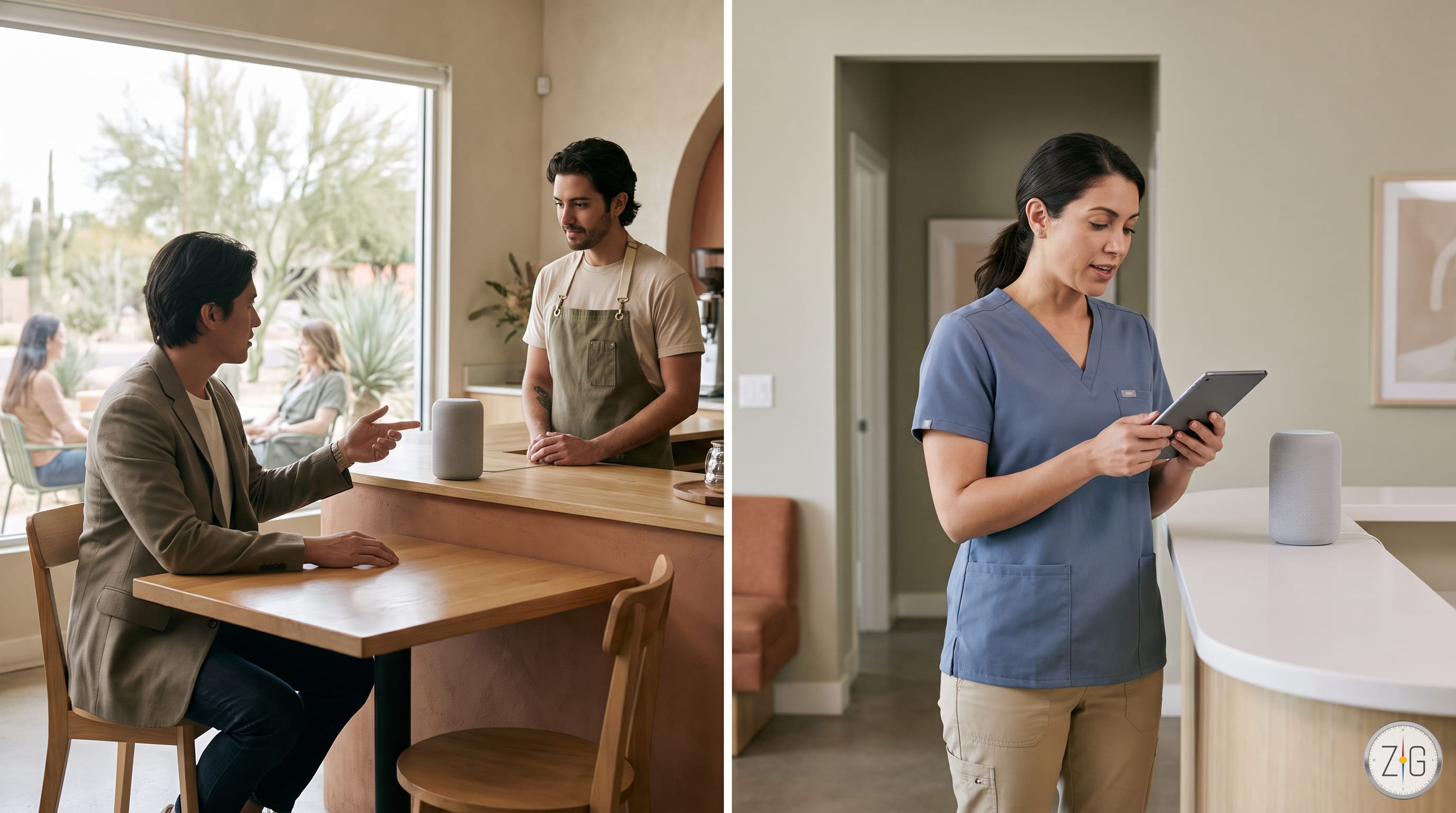
If your Scottsdale restaurant or medical practice isn't optimized for voice search, you're invisible when it counts most. Here's exactly how to fix that — no tech degree required.

Most Scottsdale businesses are invisible to AI search tools like ChatGPT and Perplexity. Here's what that blind spot is costing you — and what to do about it before your competitors figure it out.
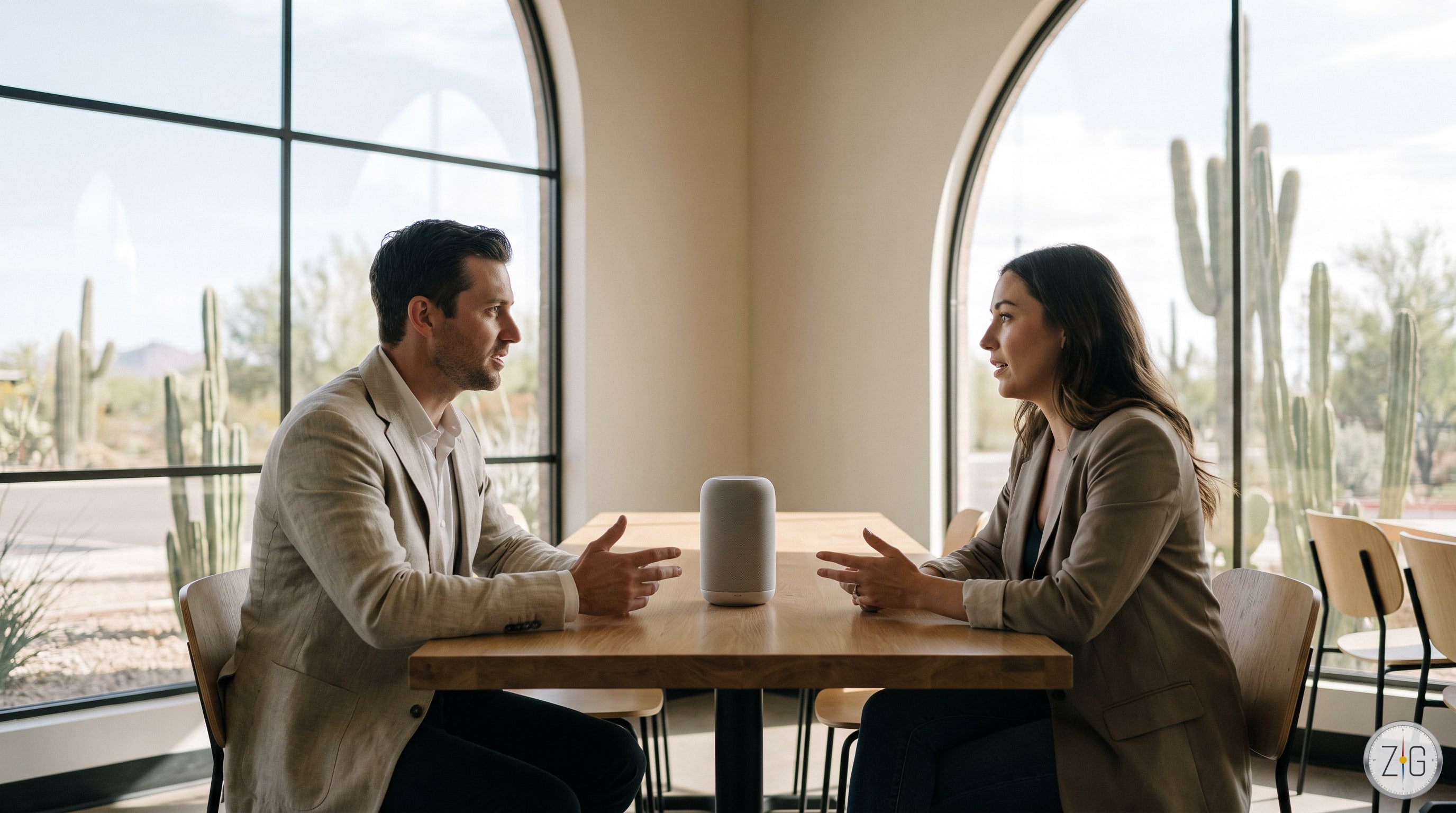
Voice search drives 27% of all queries — and your Arizona competitors are already showing up. Learn how Scottsdale restaurants, medical practices, and service businesses can win spoken searches in 2026 before someone else does.

Not sure if AI search tools like ChatGPT or Perplexity are sending customers your way — or ignoring you completely? This practical guide shows Scottsdale business owners exactly how to track and measure AI visibility in 2026, step by step.

Scottsdale business owners: stop building your audience on borrowed land. Learn why owned content systems beat rented social reach — and how to start building one before the next algorithm wipes you out.

Every missed call is a missed paycheck. Discover how Scottsdale service businesses — restaurants, medical practices, and more — are using AI receptionists to stop losing customers to voicemail 24/7.