
Quick & Dirty - Virtualizing Your Buyer's Journey
Zack Greenfield • February 23, 2021
Welcome to another episode of quick and dirty marketing. My name is Zack Greenfield, and today we're going to continue with our website page building sales series stuff that doesn't really have an official name, but today's topic is virtualizing your customer journey. So if you didn't watch how to figure out the journey, go back a video. And today we're going to do the virtualizing.
So today we're going to talk about virtualizing your customer journey. So on the last video, and if you did your homework, um, or you spent any time or even know what your customer journey is, then this is for you because there is a way once you understand what the journey is of your new customer. So you remember they're going to go from point a, just met you all the way to point B, being an ideal, um, client or customer of your business. Who's a, you know, an avid buyer or a repeat buyer, you know, a loyal fan, if you will, and what we want to do now, as much as we can with your website is to figure out how to offload the work, automate as much of the process and deliver the highest level of customer service that we can. So that, that person feels like they're being hand held through this journey by a lot of touches, might be emails, phone calls, and that they have the tools on your website to progress and move through that.
So for them, and I just want you to get into their head space for a second, for your prospect, who's going to become a customer. They see that they're in their mind, the psychology is, this is where they think I'm solving my problem. That's all they're thinking about. And if they're feel like they're getting closer to the solution, generally, they're happy if it's taking a long time, they get a little frustrated. If it's a pain in the, they get a little frustrated. But if things seem like they're really being taken care of. And I mean that like almost in a Disneyland kind of way, like that's, that's the high bar, right? Like customer service, like this prior to process is like Disneyland standards. Okay. So your everything's gotta be super great and through the whole thing. Okay. So let's talk about virtualizing it. So what are some of the tools we have?
We got your website, we've got videos we can explain things with, we've got audio we can explain things with, we've got pictures and icons that we can guide people with. We've got buttons and we got pages and we got, you know, kind of the, the funnel idea. We can take them through a process. They might have to sign up and role, fill out a form, watch a video, sign a waiver, and then, uh, get up an appointment reminder and an email about what to bring. And then they show up in their customer, right? They're going to be all those things for your business. Okay. But when we want to virtualize those, we've got to look at each part of your customer's journey and say, what is in our bag of tools? What can we use to make this piece something somebody could do on a phone or on a laptop or whatever.
So you really just need to break it down. And it becomes like a lot of different things. A lot of times we find that we open this up with a video that will tell them, Hey, this is what's going to happen. So that's an expectation type video. We're setting the expectations that, you know, if they proceed, these things will happen and they will get closer to their solution. Right? So it's, it's a sales video in so much that it's telling them that they're going to get their problem solved, but it's also an expectations video because you're managing what they're expecting to have to do, how long it's going to take. What's involved, who's responsible and what the outcome will be. Right? So all those things need to happen in that video. That's a great video to do, because if somebody is really interested in solving their problem and they get that, they're like, Oh, it's just this, this, this, this, and this.
And then my problem's going to be solved or I will be, you know, happier. My, my, uh, my pet will have a new doctor, a veterinary office, you know, so, or whatever the example is for you. Okay. So you, you're going to use a combination of videos, forms, website, content emails, and eat them out auto responders to back up and reinforce some of that stuff with especially reminders. If they have appointments or like they're going to come and do a tour, right. It's something we talked about, like for a fitness trainer or any other type of business where the, you want the customer to come in and see the product or experience whatever the service is. In-house right. So they, they may have them reminders for that and so forth. And then, um, you know, their last little bits of confirmation that they're now a customer.
So they get all of your customer tools at that point, right. In your onboarding sequence, right? So the whole process, then you just going to break it down. You're going to identify what tools you're going to use to virtualize this pathway. And then you're going to glue it all together, online so that when somebody does something, the next action is presented to them. And then when they do that action, the next step is presented to them. And then if there's a little waiting period there, they know there's a waiting period. And so they don't get frustrated managing their expectations and the next steps is going to happen. And so far, so you're just going to build this thing up. So when they finally come to show up with you, they're prepared, they know what they're part of the responsible, you know, what they're responsible for in the transaction.
Like whether it's to pay, to show up, to wear the right clothing, to bring the right things that they need to bring to you. Like, you know, if you're a hair cutter, they might need to bring pictures or examples of what they want, whatever all that stuff is, uh, they're going to be prepared. So they're going to be a better customer. They're going to be easier to work for or work for, and, and service. They're going to be more knowledgeable about what you do and the whole, thing's just going to be better. If you spend the time to do this sort of educational onboarding journey type process with them. And right now, I don't think it goes to S you know, it's obvious that goes without saying, this is one of the most important things you could be doing for your business right now is the whole world has shifted to interacting, shopping, and trying to transact and, and get involved with businesses in a virtual way for their own health safety.
Right? So it's, it's never been more relevant than today. All right. So start working on that, get your bag of tricks out, work with your web technicians, your designers, and so forth, and figure out what pieces and elements you have access to and start stringing it together. And I invite you to draw that out. Don't start making stuff until you have a plan, then start filling in all of the things that you can do. And it might not be everything. There might be some stuff that just has to happen in person, and that's okay. Just leave a block for that. Let them know this piece is in person, you know, and then after that, there's this, this and that piece. Okay. That's totally fine also. All right. So if this helps get you organized on virtualizing York, your customer's journey from just being exposed to your brand, to becoming the ultimate customer for you go ahead and like, and subscribe. On the next video we're going to talk about onboarding, which is kind of like the extension of this.

Tired of an empty waiting room? Discover how content marketing for medical practices in Arizona actually works — and how to use it to attract more patients without paid ads alone.

Still relying on a contact form to capture med spa leads? In 2026, that strategy is dead. Learn why a branded AI chatbot books more consults, converts more patients, and works while you sleep — and how to get one built for your clinic.

Stop renting your audience from Meta and Google. Learn how Arizona small businesses can build a first-party data engine using their CRM to market smarter, spend less, and own their customer relationships for good.

Is your restaurant's website driving customers away? This no-fluff guide breaks down exactly what Phoenix restaurant owners need in a high-performing website — and what to stop doing immediately.
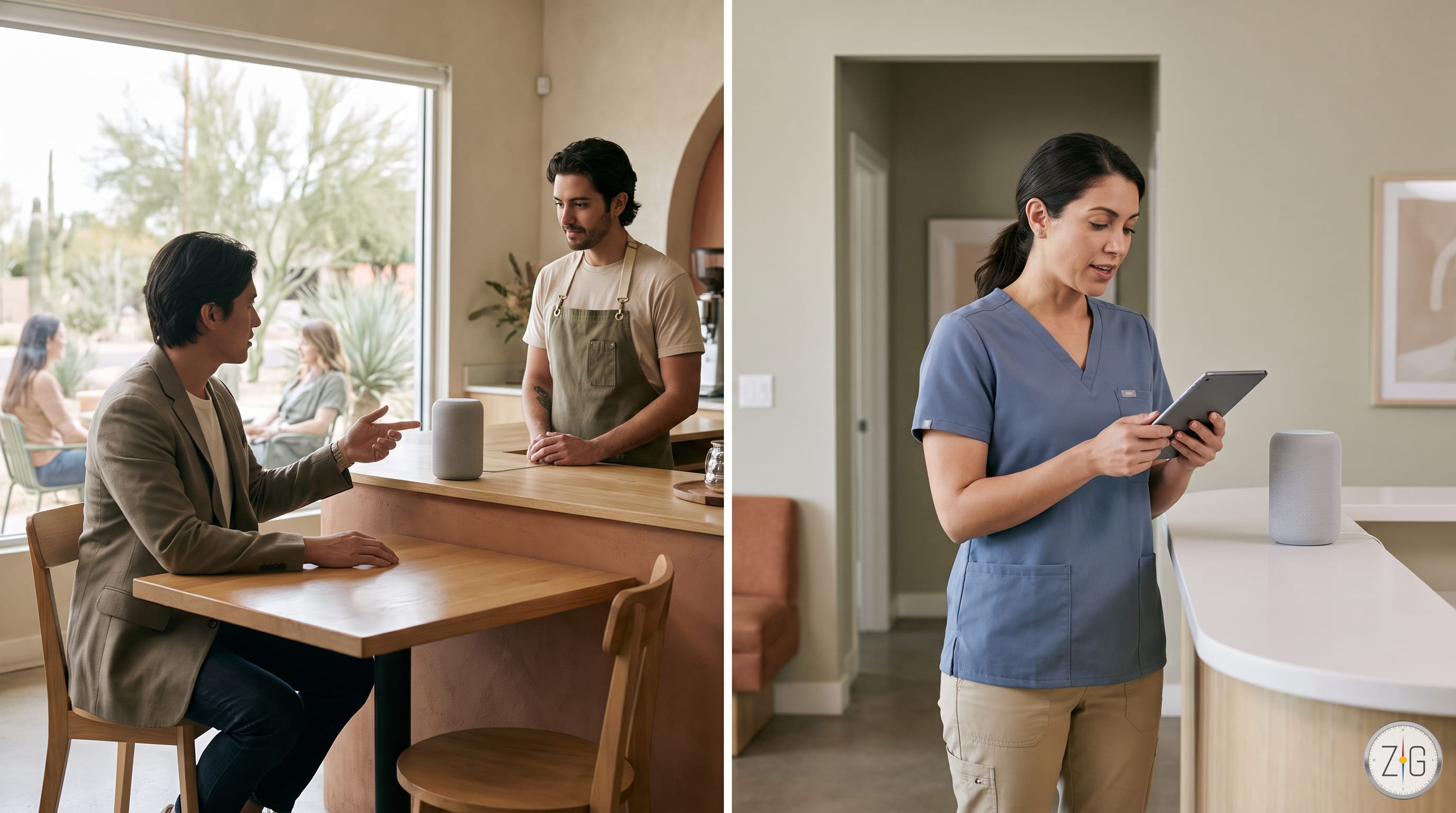
If your Scottsdale restaurant or medical practice isn't optimized for voice search, you're invisible when it counts most. Here's exactly how to fix that — no tech degree required.

Most Scottsdale businesses are invisible to AI search tools like ChatGPT and Perplexity. Here's what that blind spot is costing you — and what to do about it before your competitors figure it out.

Voice search drives 27% of all queries — and your Arizona competitors are already showing up. Learn how Scottsdale restaurants, medical practices, and service businesses can win spoken searches in 2026 before someone else does.

Not sure if AI search tools like ChatGPT or Perplexity are sending customers your way — or ignoring you completely? This practical guide shows Scottsdale business owners exactly how to track and measure AI visibility in 2026, step by step.

Scottsdale business owners: stop building your audience on borrowed land. Learn why owned content systems beat rented social reach — and how to start building one before the next algorithm wipes you out.

Every missed call is a missed paycheck. Discover how Scottsdale service businesses — restaurants, medical practices, and more — are using AI receptionists to stop losing customers to voicemail 24/7.