Stop Renting Your Customers—Start Owning Them With CRM
Most Arizona small business owners are paying Facebook and Google to find strangers while completely ignoring the customers who already handed them money and their contact information. That is not a budget problem. That is a strategy problem.
A first-party data strategy means building your marketing on customer information you collected directly — email addresses, purchase history, visit frequency, preferences — stored and activated through a CRM you own and control. No platform middleman. No algorithm deciding who sees your message today.
According to joint research from BCG and Google, companies with mature first-party data strategies grow up to 2.9 times faster than competitors and deliver 1.5x ROI. Yet according to Supermetrics' 2026 Marketing Data Report, 52% of marketing teams do not own their data strategy, and only 6% have fully embedded a data-driven approach into daily operations.
That gap is your competitive opportunity — especially in a market like Scottsdale, where restaurants, medical practices, and professional service businesses are fighting for the same online attention and the cost of renting that attention keeps climbing.
This guide is a practical playbook for fixing that. No theory. No jargon. Just a clear path to turning the customer data you already own into your most valuable marketing asset.
First-Party Data: What It Is and Why Arizona Small Businesses Should Care Right Now
First-party data is any information your customers give you directly — their email address, purchase history, appointment records, dining frequency, product preferences. It lives in your CRM, your booking system, your POS. You own it. No platform controls it. No algorithm decides who sees it.
Third-party data is the opposite. It's behavioral data collected by outside brokers and ad platforms — the kind that powered Facebook retargeting and Google display ads for the last decade. That model is functionally dead. Third-party cookies are gone across all major browsers, and the Deloitte (March 2025) research shows only 15% of marketers reported being fully ready for a cookieless world, even as 75% of brands had planned to phase out third-party data use by 2026. Ready or not, the forcing function arrived.
For Arizona small businesses, this is not an abstract privacy debate. It's a direct hit to your paid ad performance. If you've been running Facebook or Google retargeting campaigns and wondering why your cost per acquisition keeps climbing, this is a significant reason why.
The businesses replacing that lost infrastructure are winning decisively. According to an Avaus benchmark analysis (2025), brands using first-party data see 8x ROI and over 25% lower customer acquisition cost compared to those still dependent on third-party sources.
As Compass Digital put it plainly: "Too many businesses are still 'renting' their audience on platforms they don't control. In 2026, first-party data is no longer optional — it's essential for sustainable growth."
Your CRM is where that owned data lives. The question isn't whether you need a first-party data strategy. The question is how much longer you can afford to operate without one.
Your CRM Is Not a Contacts Spreadsheet. Stop Treating It Like One.
Most CRMs are graveyards for business cards. A name, a phone number, maybe an email address — and then nothing. No purchase history. No visit frequency. No record of whether this person came in once three years ago or twelve times last quarter. That is not a CRM. That is a Rolodex with a monthly subscription fee.
According to the Salesforce State of Marketing report, 86% of businesses are using CRM systems — but only 31% of marketers are fully satisfied with their ability to actually unify customer data. That gap is not a technology problem. It is a mindset problem. Businesses bought the tool and never changed how they think about it.
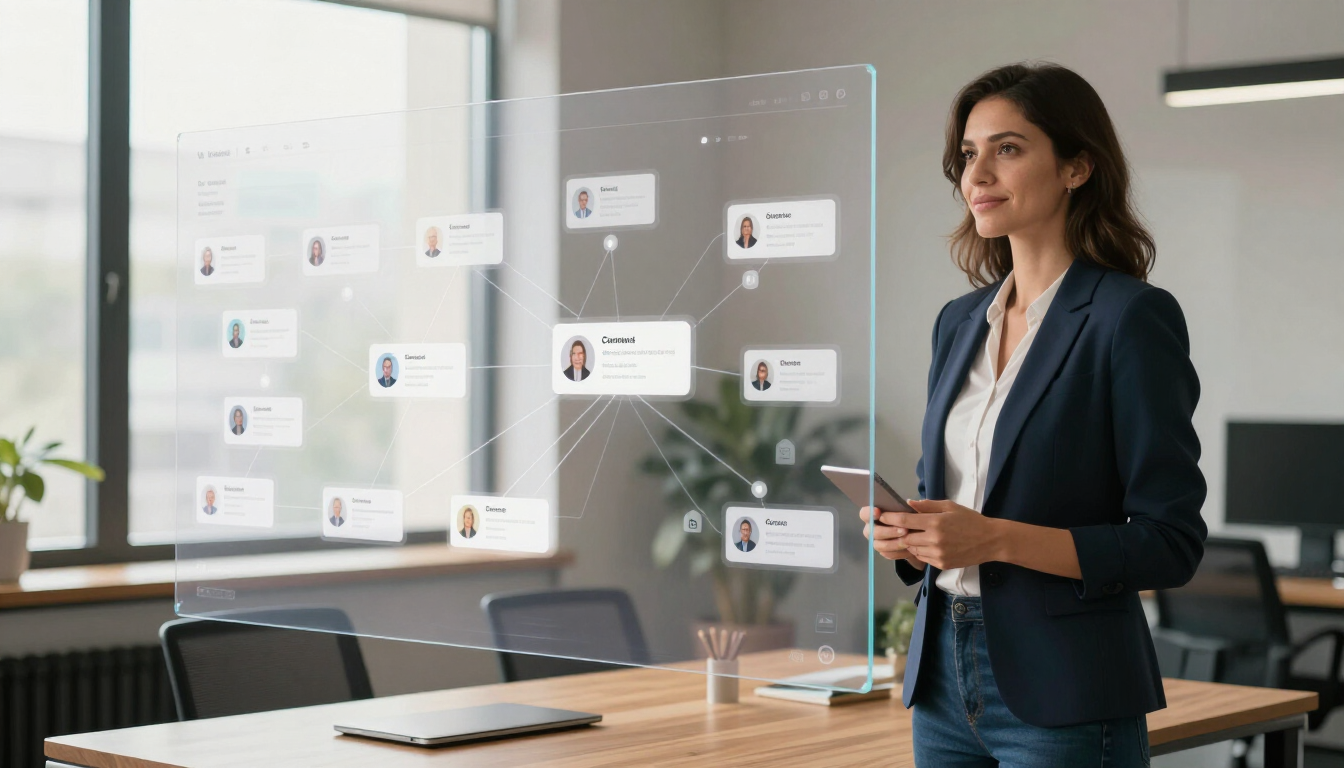
A CRM used correctly is a behavioral record of every customer relationship you have. It tracks what they bought, how often they come back, which channel they responded to last, where they are in their lifecycle with you — first-time visitor, loyal regular, or someone who went quiet six months ago and needs a reason to return. That information is worth more than any third-party audience you are currently renting from Meta or Google.
According to TechRT's first-party data research, CRM systems store up to 85% of structured first-party customer data. Your CRM is already the primary vessel for your most valuable marketing asset. The question is whether you are using what is in it.
The difference between a contacts spreadsheet and a revenue engine comes down to activation. Are you segmenting by behavior — separating the customer who visits weekly from the one who hasn't been back in 90 days? Are you triggering communications based on what someone actually did, not just blasting the whole list every time you have a promotion? Are you tracking lifecycle stage so you know who needs a win-back offer versus who needs a VIP reward?
If the answer to any of those is no, you are leaving revenue in a database and calling it marketing.
How to Build a First-Party Data Engine Step by Step
Building a first-party data engine is not a technology project. It is a discipline. The businesses that get this right do not necessarily have better software — they have better habits around how they collect, clean, and act on customer data.
Here is how to build it in the right order.
Step 1: Audit What You Are Already Capturing (and Where It Is Rotting)
Most small businesses already have first-party data. It is just scattered across a POS system, a booking platform, a paper sign-in sheet, and three different email inboxes. Start by listing every place a customer name, phone number, or email address exists in your business. That is your inventory. Now consolidate it into one CRM — not a spreadsheet, a CRM.
Step 2: Build Opt-In Capture Into Every Customer Touchpoint
The best capture points are invisible to the customer because they feel like value, not a data grab. A wellness clinic in one case study offered cycle-tracking tools and downloadable wellness guides as lead magnets — patients opted in willingly because the exchange was obvious. That is the model: give something useful, collect the contact, earn the permission.
For restaurants, that means WiFi login capture, reservation flows, and loyalty enrollment at the point of sale. For service businesses, it is the intake form, the booking confirmation, and the post-appointment follow-up. Every touchpoint is an opt-in opportunity most businesses are currently wasting.
Step 3: Clean Before You Segment
Dirty data is not neutral — it actively costs you money. Duplicate records inflate your send volume and skew your analytics. Stale emails tank your deliverability scores, which means even your good contacts stop seeing your messages. Before you build any segmentation logic, deduplicate your list, validate email addresses, and flag contacts with zero engagement in the past 12 months for a win-back sequence or suppression.
Step 4: Segment by Behavior, Not Demographics
Demographic segmentation (age, zip code, job title) is a blunt instrument. Behavioral segmentation is where the revenue lives. Segment by purchase frequency, last visit date, average order value, and communication engagement. According to HubSpot's State of Marketing Report, segmented emails powered by CRM data drive 30% more opens and 50% more click-throughs than unsegmented campaigns. That gap compounds over time.
Step 5: Connect Your CRM to Email and SMS and Automate the Triggers
A CRM that is not connected to an outbound channel is a filing cabinet. Integrate directly with your email and SMS platforms and build behavioral triggers: a welcome sequence for new contacts, a win-back for anyone 60-plus days lapsed, a milestone message at the third visit or purchase. According to Bloom Intelligence's restaurant email benchmarks, triggered behavioral emails return 7 to 30 times more guests per send than mass blasts — with welcome emails alone generating roughly $1,506 in attributed revenue per 1,000 sends versus $80 for a mass broadcast.
Set the triggers once. Let them run. That is the engine.
Real-World CRM Strategies for Scottsdale Restaurants, Medical Practices, and Local Businesses
Scottsdale is not a forgiving market to be mediocre in. According to the U.S. Small Business Administration's 2025 Arizona State Profile, the state has 706,640 small businesses — and new business applications for 2026 are running 15.3% ahead of the same period in 2025. More competition, same number of customers. The businesses that win are the ones with the deepest relationships, not the biggest ad budgets.
Restaurants: Stop Blasting. Start Triggering.
The difference between a mass email blast and a behavioral trigger email is not incremental — it is a 19x gap in revenue. According to Bloom Intelligence's Restaurant Email Marketing Benchmarks, which tracked tens of millions of emails across their platform, mass blasts generate roughly $80 in attributed revenue per 1,000 sends. A new-guest welcome email generates $1,506 per 1,000 sends.
The playbook here is simple. Segment your guest list by visit frequency. Tag anyone who has not returned in 60 days as lapsed. Fire a win-back sequence — a personal note, a reason to come back, a specific offer tied to what they ordered before. As Bloom Intelligence puts it directly: "Behavioral triggers, not bigger lists, are what bring guests back."
A multi-venue restaurant group documented by SevenRooms consolidated all guest data into one CRM, segmented by visit history and spend, and generated more than $1.3 million in attributed revenue and 18,000 covers from email across three locations in 18 months. As their manager Filipa Castanheira put it: "All of our guest data was in SevenRooms, so moving our email campaigns there just made sense." That is not a technology story. That is a data ownership story.
Medical Practices: Your Appointment List Is a Revenue Asset
Every Scottsdale medical practice and med spa has a patient list. Almost none of them are using it as a marketing engine. Onspire Health Marketing noted that healthcare organizations building first-party data systems — CRM, patient lists, preference centers — are outperforming peers still relying on broad retargeting, which privacy regulations have largely shut down anyway.
The immediate moves: automate post-appointment follow-up sequences (review request + next appointment nudge), tag patients by service type, and build a referral tracking field into every new patient record. A women's health clinic documented by Healthcare Marketing Vault boosted appointment bookings by offering wellness guides as opt-in lead magnets — converting passive patients into an owned, HIPAA-compliant audience they could communicate with directly.
Local Businesses: VIP Tiers and Seasonal Triggers
For general small businesses in Scottsdale — boutiques, salons, home service companies — two CRM moves produce outsized returns with minimal complexity. First, identify your top 20% of customers by spend or frequency and create a VIP segment. These people get early access, exclusive offers, and personal outreach. Second, build seasonal triggers based on purchase history. A customer who booked a deep-clean service last October gets a reminder email in September, not a generic newsletter they ignore.
An appointment-based service business tracked by Revenue Mastery Consulting implemented AI-driven follow-up and booking reminder sequences and saw a net monthly gain of $3,680 with a 595% ROI. The tool cost was nominal. The return was not.
First-Party Data Cuts Your Ad Spend and Makes What You Spend Actually Work
Most small businesses run paid ads the same way: cast wide, hope someone converts, repeat. The result is a cost-per-acquisition that keeps climbing and a campaign dashboard full of impressions that never become customers. First-party CRM data fixes this at the structural level — not by spending more, but by targeting smarter.
When you sync your CRM contacts to Meta or Google, you are no longer asking an algorithm to guess who might want what you sell. You are uploading the people who already bought it. Meta builds a Custom Audience from that list and then — this is where the economics actually shift — builds a Lookalike Audience of users who share behavioral patterns with your best customers. You stop paying to reach strangers. You start paying to reach people who look like your regulars.
According to Forrester Consulting (2024), organizations using first-party data for key marketing functions see 83% better customer acquisition costs, 72% better ROI, and 73% higher conversion rates versus those using other data sources. That is not a marginal improvement. That is a different business model.
The suppression use case matters just as much. Upload your existing customers as an exclusion audience and stop paying to re-acquire someone who booked last Tuesday. For a Scottsdale med spa or restaurant running weekly campaigns, that waste adds up fast.
According to Salesforce State of Marketing, 94% of high-performing marketing organizations now run fully first-party data strategies and report 37% lower customer acquisition costs as a result. The gap between businesses that own their data and those still relying on platform-controlled targeting is not closing — it is widening.
Your CRM is the only targeting asset you actually own. Everything else — pixel data, third-party segments, look-alike pools built on cookies — is borrowed infrastructure on borrowed time. The ad spend conversation changes entirely once you stop renting your audience and start activating the one you already built.
The Five CRM Mistakes That Are Quietly Killing Your Marketing ROI
1. You're Not Capturing Data at the Point of Sale
Every transaction that ends without capturing an email address or phone number is a customer you will have to pay to reach again. That is not a small problem. According to TechRT (2026), first-party data is 2–3 times more accurate than third-party datasets — but only if you actually collect it. A POS receipt that disappears is not a data strategy.
2. Your List Is a Landfill
Duplicate records, typos, dead email addresses, contacts with no purchase history attached — a dirty CRM is worse than no CRM because you make decisions based on it. You cannot segment what you cannot trust. Clean your list or everything downstream fails.
3. You Send the Same Email to Everyone
Your best customer of three years and someone who bought once eighteen months ago should not receive identical messaging. According to the HubSpot State of Marketing Report (2023), segmented emails drive 30% more opens and 50% more click-throughs than unsegmented campaigns. Treating every contact the same is leaving half your results on the table.
4. You Have Automation Available and You're Not Using It
Welcome sequences, win-back emails, appointment reminders — these run without you and compound over time. According to Nutshell (2026), 83% of AI CRM users exceed their sales goals within the first six months. The business next door is automating this. You are doing it manually or not at all.
5. You're Ignoring Customer Value Tiers
Not every customer is worth the same, and marketing as if they are wastes budget on low-value contacts while under-investing in high-value ones. A three-venue restaurant group that consolidated guest data by visit frequency and spend history in SevenRooms generated more than $1.3 million in attributed revenue from email marketing in 18 months — according to SevenRooms (2026). That only happens when you know who your best customers are.
What a Properly Activated CRM Looks Like in the Real World
Before: A Scottsdale restaurant owner has 4,200 Instagram followers, a POS full of guest emails, and a marketing budget split between boosted posts and a monthly email blast to an unsegmented list. The blast gets a 12% open rate. The boosted posts reach 300 people. Revenue is flat. They call it a slow season.
After: Same owner. Same list. But now the CRM segments guests by visit frequency, average spend, and last visit date. Lapsed guests — anyone who hasn't visited in 60 days — get a behavioral win-back sequence automatically. First-time visitors get a welcome email within 24 hours. VIP guests get early access to events.
That shift is not theoretical. According to SevenRooms (2026), a multi-venue restaurant group that consolidated guest data and email marketing onto one CRM generated more than $1.3 million in attributed revenue and 18,000 covers across three venues in 18 months. Same customers. Smarter system.
The medical practice version of this looks like: scattered appointment reminders via front-desk phone calls replaced by an automated post-visit sequence, a segmented patient list organized by service type, and zero reliance on third-party retargeting that Onspire Health Marketing confirms is no longer a compliant or reliable growth path for healthcare organizations.
A properly activated CRM does not feel like technology. It feels like finally having a business that remembers its customers — and acts on that memory automatically.
The data you already own is worth more than any ad platform you are paying to borrow. That is not a tagline — it is the conclusion that joint research from BCG and Google reached when they found companies with mature first-party data strategies grow up to 2.9 times faster than competitors. The businesses winning in Scottsdale's intensely competitive market are not the ones with the biggest ad budgets. They are the ones who built an audience they actually own.
Social algorithms will keep shrinking your reach. Privacy regulations will keep closing targeting doors. Ad costs will keep climbing. None of that changes if you keep renting attention from platforms that do not care whether your business survives. What changes it is building the system that makes your existing customer relationships compound over time — a clean CRM, behavioral segmentation, and automated sequences that run while you are running your business.
That system is not complicated. It is not expensive. It just needs to be built correctly and actually used.
Ready to find out if your CRM is working for you or just collecting dust? Book a free marketing audit with Zack Greenfield Company and we will show you exactly what your first-party data engine should look like — built specifically for your business, your market, and your customers in Scottsdale.
Frequently Asked Questions
What is a first-party data strategy for small businesses?
A first-party data strategy means collecting, organizing, and activating customer data you own directly — email addresses, purchase history, visit frequency, and behavioral signals — rather than relying on third-party platforms or cookies you do not control. For small businesses, a CRM is the primary tool for building and executing this strategy.
Why is a CRM considered a marketing asset?
A CRM is not just a contacts list — it is the infrastructure that turns one-time customers into repeat revenue. According to Nucleus Research, CRM systems deliver an average ROI of $8.71 for every $1 spent and drive a 29% increase in sales revenue when properly activated with segmentation and automation.
How does first-party data reduce paid advertising costs?
First-party CRM data allows you to build custom audiences and lookalike segments on Meta and Google using people who have already bought from you — dramatically improving targeting accuracy. According to Forrester Consulting, organizations using first-party data for key marketing functions see 83% better customer acquisition costs compared to those using other data sources.
Is a CRM worth it for a small business in Arizona?
Yes — especially in a high-competition market like Scottsdale. Arizona has 706,640 small businesses according to the U.S. Small Business Administration, and new business applications are accelerating, meaning competition is intensifying. A CRM-powered owned audience is one of the few durable competitive advantages that does not depend on platform algorithms or ad spend.
What is the difference between rented and owned audiences?
A rented audience is one you access through a platform you do not control — social media followers, ad retargeting pools, or third-party data. An owned audience is a list you built directly, like an opt-in email or SMS list in your CRM. As Compass Digital notes, businesses still renting their audience in 2026 are one algorithm change away from losing that access entirely.