
How Does Your Business Look in Metaverse
Zack Greenfield • November 16, 2021
Today we're going to talk about what your business might look like in the metaverse. So this is for you - local business owners. What does all this metaphor stuff means? Stick with me and I'm going to give you my peace of mind on it.
So the first thing to think about when you think about the metaverse and this is like, I really liked what Mark Zuckerberg and, you know, whatever your feelings are about him and Facebook and all that. Just set that aside for one second, please. And let's just try to dive into the relevancy for all of us, regular folks. I liked what he said to Gary Vaynerchuk on their little Skype interview that this internet thing is, you know, especially in terms of, you know, kind of the web and then 2.0 and sort of where we're going has velocity, you know, the web was mostly text, then it became very pictorial, you know, image-based and then it sort of jumped to video with the expansion of bandwidth, especially on mobile devices. And that's kind of where we're at right now. And we certainly stress a ton of video with our clients and, you know, keep adding those to web pages and keep trying to virtualize that, you know, one-to-one interaction as much as possible, whether that be customer service, onboarding sales, landing pages, all the things you know, that we've talked about on this channel and things that as small business owners and medium sized business owners and especially local businesses, we, you know, oftentimes are still struggling.
We feel like we're playing catch up and now they're dropping this bomb on us that there's this whole other thing coming, which is the sort of 3.0, right. So it's going to be web 3.0, and it's called the metaverse for whatever reason, I guess that's where we're at. It's been branded. So what does it mean for us? Right. Well, right now it doesn't mean anything except for, to start contemplating kind of where you're at. And I came up with sort of three categories that I think are relevant to think about and it sort of fall, you know, sorta starts to draw some lines about what you actually provide, right? So if you provide services that are sort of virtual lies usable, so that word, if you provide services that you can do virtually like great examples of that are, you know, coaching and even telemedicine something, we focus on here a lot with our medical clients and, you know, what, what does your business fit into that?
Could you actually do some of your services and this pandemic, this chapter we've all been in together is definitely tested a lot of us for that, you know, and how, how much of that can we virtualize through video conference calls and, SMS platforms and messaging and, you know, direct messenger and all these other choices and platforms and tools that we do have. So you kind of have your, you might be in that category and then you might have a little bit of an easier move into this metaverse environment with just adding more tools to that, like VR and augmented reality and other, you know, sort of more what I would call immersive interaction tools. Then there's this kind of hybrid thing, which is how much of your business, if you don't provide a virtual service or a virtual experience, can you virtualize? And I think a good example of this is just to talk about restaurants for a second, right?
Nobody can taste the food through an app or through the metaverse or through a pair of goggles or whatever, right? I mean, at some point you got to get there and you got to eat or you need to have it delivered or whatever. However, there's a lot of that restaurant experience that can be previewed or what I called like a metaverse taste tester, right? You could provide a pretty good virtual taste test. And I don't mean that in terms of the fee, the food, I mean that, and this is a bigger example we're using that. We could tease up some enthusiasm with our customers by showing them the restaurant. Now, this is something we've been doing for the past several years using 360 spherical images so that people can virtual tour and look inside the restaurant environments or the business environments. Right. So we've already kind of had a preview of these tools, but what is the user experiencing on their other end?
Well, with the limitations of this flat screen that we have, you know, this like six and a half piece of six and a half inch piece of glass that we've all got in our pockets right now, the, you know, the best you get out of that as you can kind of get to hold it up and look around the restaurant, that's like the coolest version of it. And it's, you know, informative, but not immersive. And I think that's the difference. Now, if you put on a set of VR goggles and you started looking at places to eat, could you virtually re visit these restaurants and kind of get an idea of what the atmosphere was like, and even, and dare I say, take a walk through the kitchen, right? So this is where things get kind of interesting. How much can you preview of your business?
How much can you draw that customer in using what are these, you know, new tools that we're going to have a lot of which are going to become about marketing and sales. There's just no question about it, right? To enhance your business's ability to communicate and engage the audience that you want to come down there, you know, and in this example eat right. But there's a drop-off point there. You can't taste the food until you show up at the restaurant. Right? So there's, and this is my hybrid example, right? So the first one was a totally virtual experience like coaching, maybe telemedicine or some services that can be completely virtualized and don't necessarily need to have an inner in-person interaction. And then you've got this restaurant example I just gave you that kinda could probably be both. And then you've got like a pure analog business, like, let's call it like, this is wild example here.
And by the way, I just make these up on the fly, no script. What about like a zip line tours type of business? Now that's like a full-blown adrenaline rush type of experience that you really need to do in person. That's the analytic experience. Now, could you preview it using VR? Absolutely. Is it going to be the same experience? Hell no, but would it make some pretty cool marketing? Oh yeah, it sure would. Because you could film that with your 360 cam virtualize that and let somebody that visits your, you know, whatever it's going to be, your little corner of the metaverse, right. Your Metta address, I guess, cause it's probably not a website and they can walk into your, zip line business, jump up on the platform. You know, you kind of get the POV, grab the harness and Xu off you go.
And then people just decide, you know, are they gonna come do that for real or not? And the real question I think for all of us is like, well, if you give them that virtual experience, are they then going to show a, can pay for the real thing? Or do we charge for the virtual experience as some sort of like preview like a buck, a ride VR, and then do we charge the normal rate for somebody that shows up in person where we have insurance and all the other costs that go against it, everything. So, you know, there's, there's definitely businesses, I think cannot and will never really be able to be fully experienced unless the person is actually, they are engaged in, you know, the service or product that's being offered. But there's clearly, you know, right now in my mind, and this is my opinion, everybody's got opinions on the web now, after this sort of brand change happened with Facebook, that we're all sort of brainstorming.
And this video is really my invitation to you to start brainstorming about how your business might look as these things unfold in the next three to five years. Cause it's not going to take forever, you know, and it might, it might suck in five years and it might take, you know, 10 years. I mean, video on the internet sucked for a good five to seven years, maybe even 10 years. And now it's pretty darn good. Right? You can watch a full feature length movie on your phone, um, and pretty real get a really good quality. Your friends can send you videos, you could share a ton of stuff. So it's definitely evolved with bandwidth. So meta and the idea of a virtualized, web communication, product services and human being, you know, interaction platform definitely holds a lot of room for us to imagine and a lot of room to improve from where we are today.
So go ahead and start dreaming up what your business might look like. Maybe it might fit into my sort of three categorical ideas that I'm throwing out there today. And count on me to continue to touch back into this topic as the marketing opportunities evolve. And we all start learning about how to fit our businesses in and take advantage of the new opportunities that certainly will unfold as this thing reels forward. This was fun to watch in any way. Go ahead and like the button here on YouTube and subscribe to the channel and go ahead and share this around and we'll see on the next one on quick and dirty marketing.

A straight-talking guide to digital marketing for medical practices in Arizona: local SEO, reviews, HIPAA-safe ads, and AI automation that actually fills your schedule.
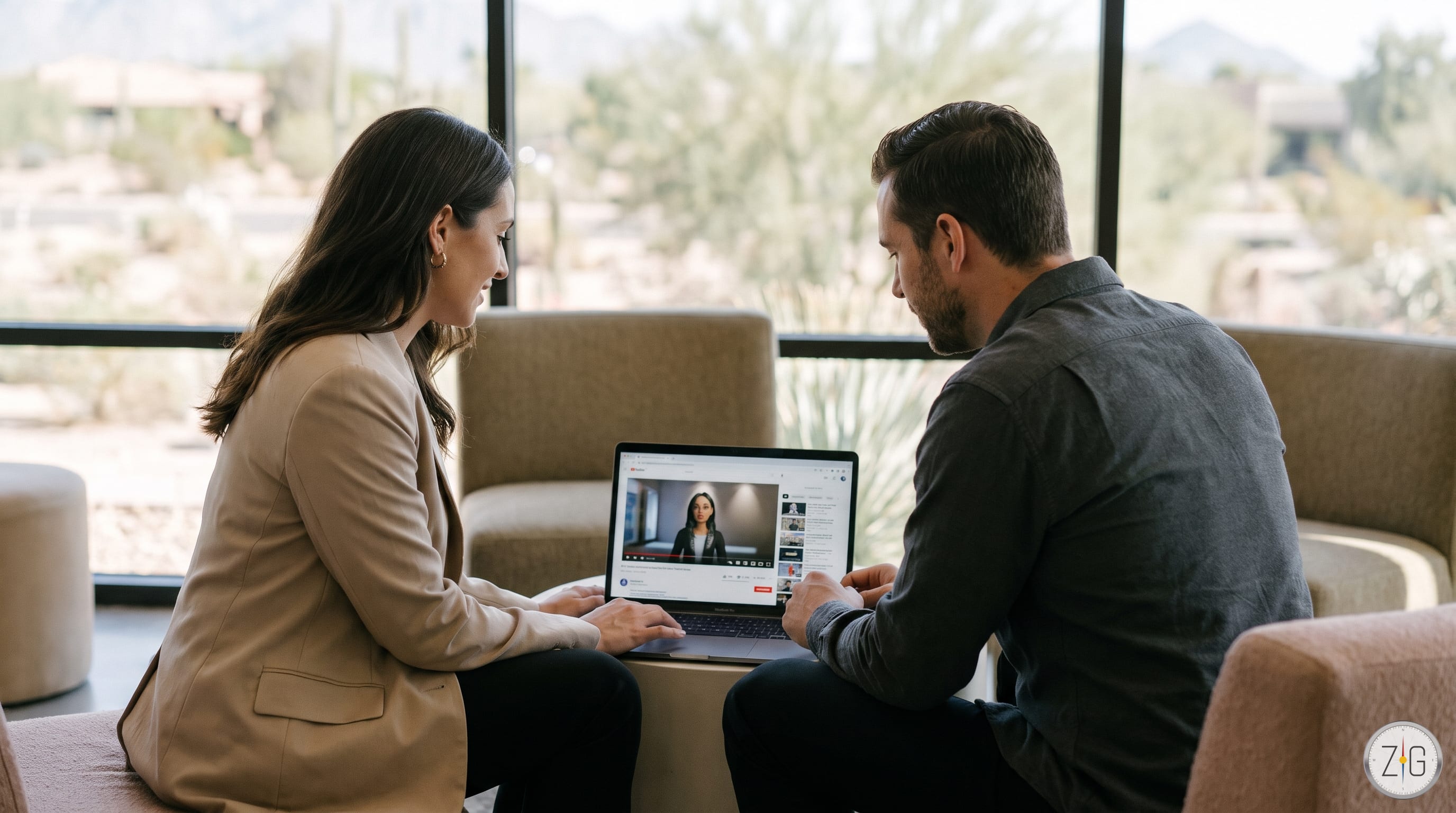
Scottsdale business owners: stop avoiding video marketing. Learn how AI avatar technology lets you record once and generate a full month of professional content — no camera crew, no bad hair days, no excuses.

Think ignoring AI is a safe bet? Think again. Here's exactly how much your Scottsdale business is bleeding every month by sitting on the sidelines — in real dollars, real hours, and real lost customers.

Only 31% of businesses have adopted agentic AI workflows — which means your Scottsdale competitors probably haven't either. Here's how small business owners can move first and actually win.

Tired of an empty waiting room? Discover how content marketing for medical practices in Arizona actually works — and how to use it to attract more patients without paid ads alone.

Still relying on a contact form to capture med spa leads? In 2026, that strategy is dead. Learn why a branded AI chatbot books more consults, converts more patients, and works while you sleep — and how to get one built for your clinic.

Stop renting your audience from Meta and Google. Learn how Arizona small businesses can build a first-party data engine using their CRM to market smarter, spend less, and own their customer relationships for good.

Is your restaurant's website driving customers away? This no-fluff guide breaks down exactly what Phoenix restaurant owners need in a high-performing website — and what to stop doing immediately.
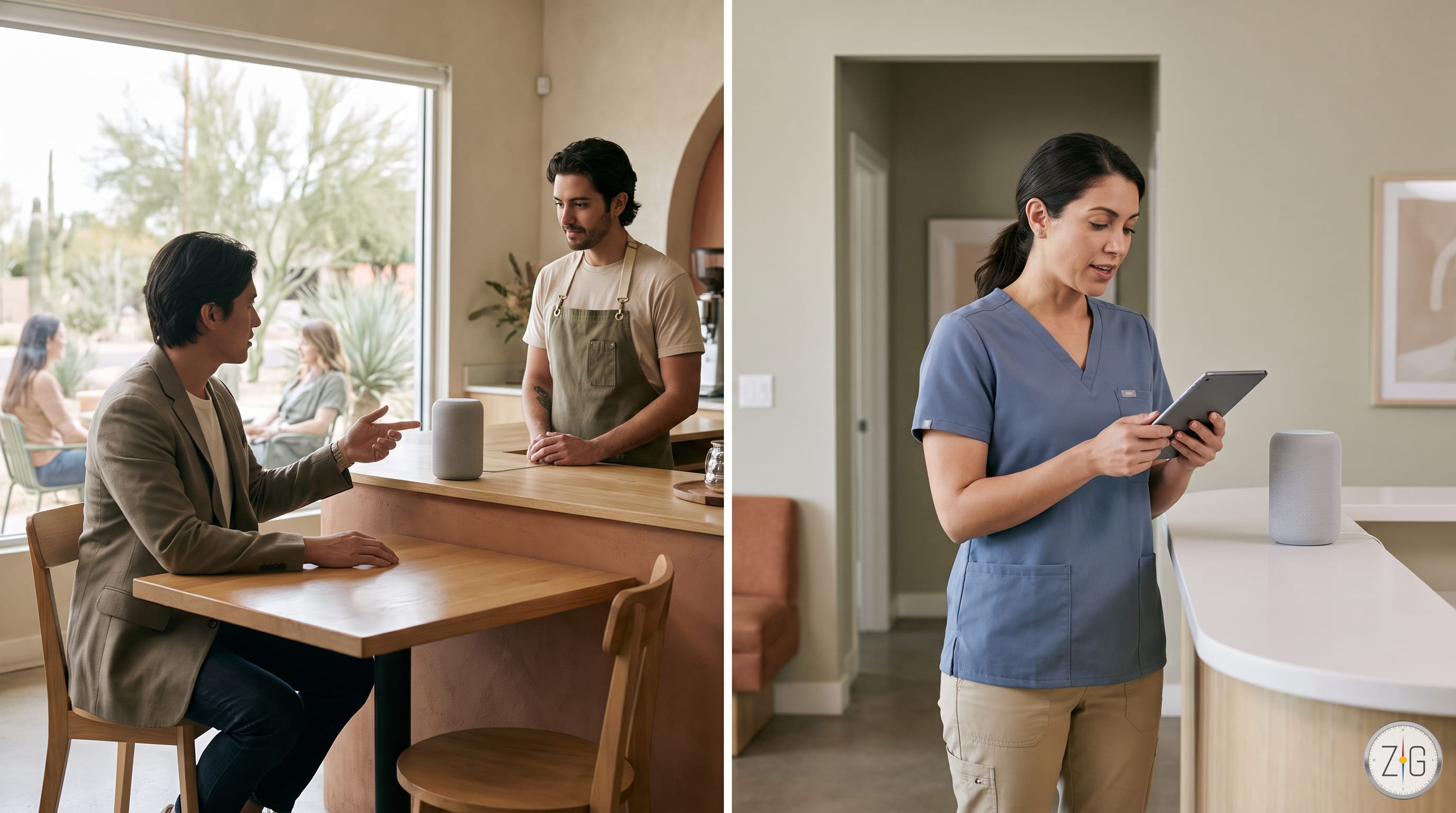
If your Scottsdale restaurant or medical practice isn't optimized for voice search, you're invisible when it counts most. Here's exactly how to fix that — no tech degree required.

Most Scottsdale businesses are invisible to AI search tools like ChatGPT and Perplexity. Here's what that blind spot is costing you — and what to do about it before your competitors figure it out.