Your Restaurant's Instagram Isn't The Problem—Local Discovery Is
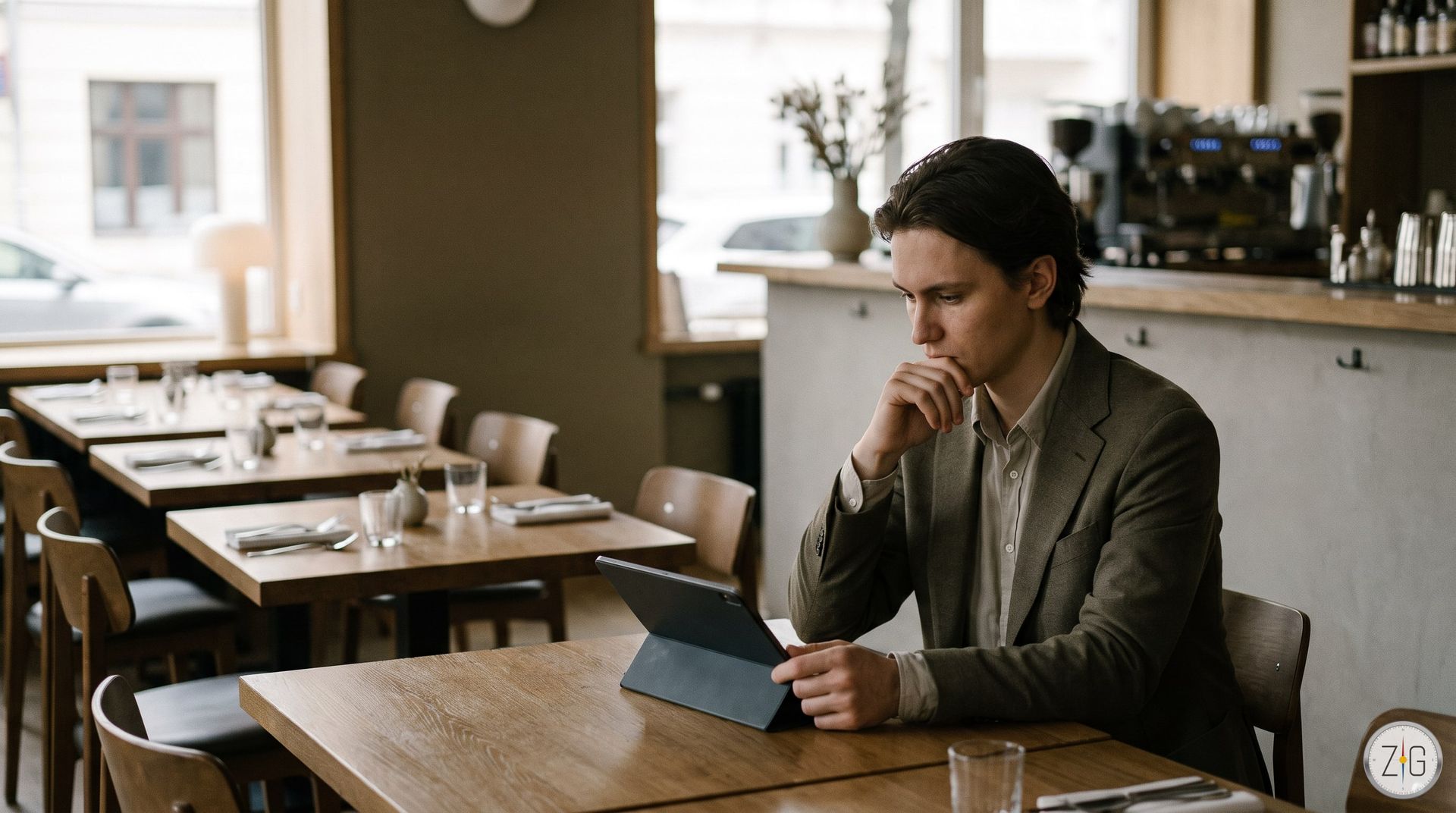
You are posting three times a week. The plating is immaculate. The lighting makes your food look like it belongs in a magazine. You have got 4,800 followers and a Reel that hit 12,000 views last month. And on a Tuesday night, half your tables are empty.
This is not a content problem. This is a local discovery problem — and they are not the same thing.
Instagram was built to hold attention. Google was built to connect intent with action. When someone in Scottsdale decides they want dinner tonight, they are not scrolling their feed — they are typing "best pasta near Old Town" into Google and clicking one of the first three map results. According to Malou's 2025 Digital Benchmark Study, 79% of restaurant searches are non-branded. Diners are not looking for you by name. They are looking for a category, a neighborhood, a craving — and whoever shows up first wins the table.
According to Google Consumer Insights via Krofile, 76% of people who search for a local business on their mobile phone visit within 24 hours. That is the highest-intent channel in local marketing — and most restaurant owners are not competing for it because they are too busy curating their Instagram grid.
The fix is not to abandon Instagram. It is to stop mistaking it for an engine when it is actually a paint job. What follows is the framework that actually fills tables.
Your Instagram Followers Are Not Your Customers (Probably)
A restaurant Instagram account with 5,000 followers and stunning food photography is not a marketing asset. It is a portfolio that people in other cities admire and never act on.
Instagram's algorithm does not care where your restaurant is located. It cares what content performs. When your birria taco reel gets 12,000 views, the platform distributes it to whoever is most likely to engage — and that audience is almost certainly scattered across the country. As the Dash Social 2026 Social Media Benchmark Report found, non-follower views on Instagram rose from 30% to 49% between 2023 and 2025. Algorithmic reach has officially outpaced follower reach. Most of those eyeballs are not in your zip code.
This is the reach versus relevant reach problem. Total reach is a vanity metric. Relevant reach — people within driving distance who are hungry and looking for somewhere to eat tonight — is the only number that fills tables. The FoodShot AI editorial team put it plainly: "Follower count is the vanity metric restaurants keep reporting to themselves. It doesn't book tables."
The platforms where local dining decisions actually happen tell a different story. According to Forbes data cited by Krofile, 46% of all Google searches carry local intent. And according to Malou, citing Red Local Agency data, the Google Local Pack — those top three map results — captures 44% of all clicks in local restaurant searches, compared to just 29% for standard organic results.
If you are not in that pack, you are functionally invisible to the customers who are ready to spend money tonight. No follower count fixes that.
Where People Actually Decide Where to Eat
When someone is hungry and looking for a place to eat tonight, they do not open Instagram. They open Google and type "best tacos near me." That is the moment that matters — and according to Krofile (citing Forbes), 46% of all Google searches carry local intent. Nearly half of all search activity on the planet's dominant search engine is someone trying to find something close to them, right now.
Instagram is an inspiration platform. Google Maps is a decision platform. Those are not the same thing, and conflating them is costing you tables.
According to Toast's 2026 Guest Discovery Report, surveying 1,466 U.S. diners, TikTok alone drives 38% of restaurant discovery among Gen Z — but even that skews younger. Diners aged 18–34 rely on social media to find restaurants at 46%. Diners over 35? That drops to 35%. Social has a real role, but it is demographic-specific and it is still not where the final decision gets made.
The final decision happens in the Google Local Pack — the three map results that appear at the top of any location-based search. That pack captures 44% of all clicks in local restaurant searches, according to Malou. If your restaurant is not in those three results, you are effectively invisible to nearly half the people actively looking to eat somewhere right now.
As Abby Hughes, Head of Growth and Strategy at Belle Communication, put it: "The way that people are discovering restaurants and choosing restaurants is dramatically changing — they're going to social media first before Google, and even before Yelp." She is right that social plays a role. But "first" does not mean "only." Discovery and decision are different steps, and restaurants keep investing in the first while ignoring the second.
Instagram gets the browse. Google gets the booking. Build accordingly.
The Google Business Profile Problem Nobody Talks About
Picture this: a Scottsdale diner is standing on Scottsdale Road, hungry, phone in hand. They search "best patio brunch near me." Two restaurants come up. One has 50 recent reviews, real food photos, updated hours, and a menu link. The other has 8 reviews from 2022, no photos, and hours that say "may vary." They pick the first one. You had better hope that first one is you — because your Instagram follower count is not visible on that screen.
This is where most restaurants bleed customers without knowing it. According to the DoorDash 2026 Restaurant Industry Trends Report, 51% of consumers discover restaurants through Google Search. Meanwhile, 69% of diners aged 54 and older use Google or Yelp — not Instagram — for restaurant discovery, according to Cropink (2025). That is a massive, high-spend demographic your Reels are never reaching.
Your Google Business Profile is not a yellow pages listing. It is a living, ranked asset. Photos matter — listings with photos receive significantly more direction requests than those without. Hours need to be accurate, especially holiday hours, because one wrong hour costs a real table. Review responses signal to Google that you are an active, legitimate business, not a ghost kitchen that opened in 2019 and never checked back in.
Attributes — outdoor seating, happy hour, reservations accepted — those filter options affect whether you surface when someone searches specifically for what you offer. Menu links convert browsers into bookers. GBP posts, which almost no one uses, keep your profile fresh and feed Google's relevancy signals.
Sterling Sky's 2025 analysis, cited by Restaurant Velocity, found that 50 recent reviews consistently outrank listings with 200 reviews accumulated over five years. Recency beats volume. The algorithm is telling you something: an active profile wins. Most restaurants ignore it entirely.
The diner chose the restaurant with better local infrastructure. Not better food. Not more followers. Better profile.
Instagram Can Work for Local Discovery — Just Not the Way You're Using It
Instagram is not useless for local discovery. It is just being used wrong by almost every independent restaurant running it.
As of July 2025, Instagram officially allowed Google to index public posts from professional accounts. That means every Reel, caption, and photo you post is now a potential search asset — if you treat it like one. Most restaurants don't. They caption their food photos with emojis and vibes. No location signals. No searchable keywords. No local context. Just beautiful content floating in the algorithm, helping no one find them on a Tuesday night.
Here is how to fix that without overhauling your entire operation.
Tag the Location. Every Single Time.
Add a location tag to every post and Reel — not just your restaurant, but the neighborhood. "Old Town Scottsdale," "Downtown Phoenix," "Arcadia" — these geo-signals tell both Instagram's algorithm and Google's indexing crawlers where your content belongs. It takes four seconds and most restaurants skip it.
Use Geo-Specific Hashtags, Not Generic Food Hashtags
According to TrueFuture Media, location-specific hashtags mentioning a city or neighborhood increase Instagram content reach by up to 38% compared to generic food hashtags. #ScottsdaleEats surfaces your content to people actually in the market. #foodie surfaces it to everyone and no one.
Write Captions Like a Local Search Result
Your caption is now indexable. Treat the first sentence like a meta description: "Best wood-fired pizza in Old Town Scottsdale — open late Friday and Saturday." That is not poetry, but Google can read it. Your followers can too.
None of this replaces a real local SEO strategy. According to HubSpot's 2026 State of Marketing report, short-form video is the highest-ROI content format for the third consecutive year — but ROI only materializes when that content is discoverable. Pretty Reels with zero local signals are still just entertainment for the wrong zip code.
Use Instagram to reinforce your local presence. Build that presence somewhere else first.
Local SEO Is the Engine. Instagram Is the Paint Job.
Here is the clearest way to think about this: local SEO is the engine that gets someone to your door. Instagram is the paint job that makes them feel good about the car they already chose. Swap the order, and you have a beautiful vehicle that does not move.
A restaurant with a polished Instagram presence but weak local search infrastructure is essentially running a very expensive brand awareness campaign for an audience that was never going to convert. The Local Pack — those top three Google Maps results — captures 44% of all clicks in local restaurant searches, according to Red Local Agency data via Malou. Standard organic results get 29%. Instagram is not in either column.
The restaurants that win are not choosing between SEO and social. They are using Instagram to reinforce a decision the diner has already made on Google. Someone searches "best patio restaurant Scottsdale," finds you in the Local Pack, clicks your profile, then opens your Instagram to confirm the vibe. At that point, your Reels close the deal. But Instagram did not start the conversation — Google did.
When you build the foundation first, every piece of content compounds. According to TrueFuture Media (2026), restaurants using Stories with direct reservation links see 41% higher conversion to actual bookings. That stat only matters if someone arrived at your profile with intent. Without the SEO engine driving that traffic, the reservation link is a button nobody presses.
Paint without an engine is just a pretty car sitting in the driveway.
What a Real Local Discovery Strategy Looks Like
A complete local discovery strategy has six working parts. Remove one and the whole system underperforms. Most restaurants have one or two of them, which is why most restaurants are invisible to the people most likely to actually show up.
Here is what the full picture looks like:
- An optimized Google Business Profile — complete hours, updated photos, menu links, attributes, and active GBP posts. Not set-and-forgotten. Active.
- Consistent NAP citations — your Name, Address, and Phone number matching exactly across every directory: Yelp, TripAdvisor, Apple Maps, Bing, OpenTable. One inconsistency confuses Google. Fifty inconsistencies bury you.
- A review generation system — not "we hope happy guests leave reviews." An actual process. Sterling Sky's 2025 analysis, cited by Restaurant Velocity, found 50 recent reviews regularly outranked listings sitting on 200 reviews spread over five years. Recency beats volume. That does not happen by accident.
- Local keyword content — landing pages and blog content built around what your actual customers search: "best brunch Scottsdale," "rooftop restaurants Old Town," "gluten-free dinner near me." Not generic. Hyper-local.
- Geo-targeted paid social — ads with a defined radius around your location, your competitors' locations, and high-traffic feeder zones. Impressions that reach people who cannot physically get to you are money set on fire.
- Instagram as reinforcement — geo-tagged posts, location-specific hashtags, Stories with direct booking links. According to TrueFuture Media, restaurants using Stories with reservation links see 41% higher conversion to actual bookings. Instagram's job is to close — not to carry the whole load.
The Arizona Restaurant Association reported approximately 13,000 restaurants across Arizona generating over $23 billion in annual sales. That is a saturated market. The restaurants capturing consistent foot traffic are not the ones posting the prettiest content — they are the ones that show up when someone nearby opens Google and types what they are hungry for.
This is not a checklist you knock out in an afternoon. It is an infrastructure build. The difference between a restaurant that is discoverable and one that is not is not talent or food quality. It is whether the infrastructure exists.
The Scottsdale Restaurant Market Is Competitive. Invisible Is Not an Option.
Scottsdale is not a forgiving market. According to the Arizona Restaurant Association, the state has approximately 13,000 restaurants generating over $23 billion in sales — and a significant chunk of that competition is concentrated in one zip code. More than 1,000 restaurants compete for tables in Scottsdale alone.
Then December 2025 happened. The Michelin Guide announced it would award Arizona its first-ever restaurant ratings in 2026, according to the Barré Properties Scottsdale Dining Guide. That is not a footnote. That is a signal that the national dining conversation just turned its eyes toward this market — which means more competition, more well-funded operators, and less patience from diners who now have a Michelin map to follow.
Scottsdale's customer mix makes this harder, not easier. Locals eat on routine. Tourists eat on research. Snowbirds eat on habit. Each group finds restaurants differently, which means a single national content strategy — post pretty food, hope for the best — serves none of them well.
The operators who will win this market are not the ones with the most followers. According to Restaurant Velocity (citing a 2025 industry survey), 99% of full-service restaurants already have an active social profile. Having one is table stakes. Being findable when someone searches "best patio dining Scottsdale" at 6:45 PM on a Thursday — that is the actual competition.
Stop Feeding the Algorithm and Start Feeding Your Dining Room
According to Restaurant Velocity's 2025 industry survey, 99% of full-service restaurants maintain at least one active social media profile. Only 69% maintain a functional website. That gap tells you everything about where the restaurant industry's priorities are pointed — and why so many dining rooms stay half-empty despite packed Instagram feeds.
The mindset shift is not complicated, but it is uncomfortable: you are a local business, not a content brand. Content creators need followers. Local businesses need foot traffic. Those are different goals that require different strategies, and confusing them is expensive.
Instagram is not the enemy. Used correctly — with location-specific hashtags, geo-tagged posts, and content structured for Google indexing — it contributes real local reach. According to Marketing LTB 2025 research (via TrueFuture Media), location-specific hashtags increase Instagram reach by up to 38% compared to generic food hashtags. That is Instagram doing local work. That is worth doing.
But it only compounds when the foundation exists. According to a Malou study of 2,000+ restaurant locations, restaurants that centralized their local SEO and online presence management saw 2.5x higher discovery rates on Google Maps. Instagram did not produce that lift. Infrastructure did.
Build the foundation. Then let every post work harder because of it.
Here is the uncomfortable truth: a beautiful Instagram account with thousands of followers is not a marketing strategy. It is a highlight reel that people scroll past on their lunch break in Minneapolis and forget by dinner.
The restaurants filling tables in Scottsdale are not the ones with the most aesthetic grids. They are the ones showing up when someone types "best sushi near Old Town" into Google at 6:45 on a Friday. That is the moment that matters. That is the decision point. And if your local search infrastructure is not built to win that moment, no amount of Reels will save you.
According to Dash Social's 2026 Social Media Benchmark Report (via Joli), non-follower views on Instagram rose from 30% to 49% between 2023 and 2025. Algorithmic reach has overtaken follower count. That is actually good news — but only if your content is geo-targeted, keyword-rich, and connected to a local SEO foundation that converts discovery into foot traffic. Research from Marketing LTB (via TrueFuture Media) found that location-specific hashtags increase Instagram reach by up to 38% compared to generic food hashtags. Small tactical shift. Compounding impact.
Most restaurant owners do not have time to audit their Google Business Profile, build a review generation system, restructure their content strategy, and still run a kitchen. That is not a criticism — it is just reality.
That is exactly what Zack Greenfield Company does. Book a free local visibility audit and find out exactly why your ideal customers are finding your competitors instead of you. No fluff. No generic advice. Just a clear picture of what is broken and how to fix it.
Your food deserves a full dining room. Let's make that happen.





World Cup 2026: Why Non-Sponsors Are Outplaying the Big Brands (And What It Means for Your Business)